
Private vs Public Utilities: What BYDA Doesn't Cover on Australian Sites
Published on 6/18/2026 by HR Utilities
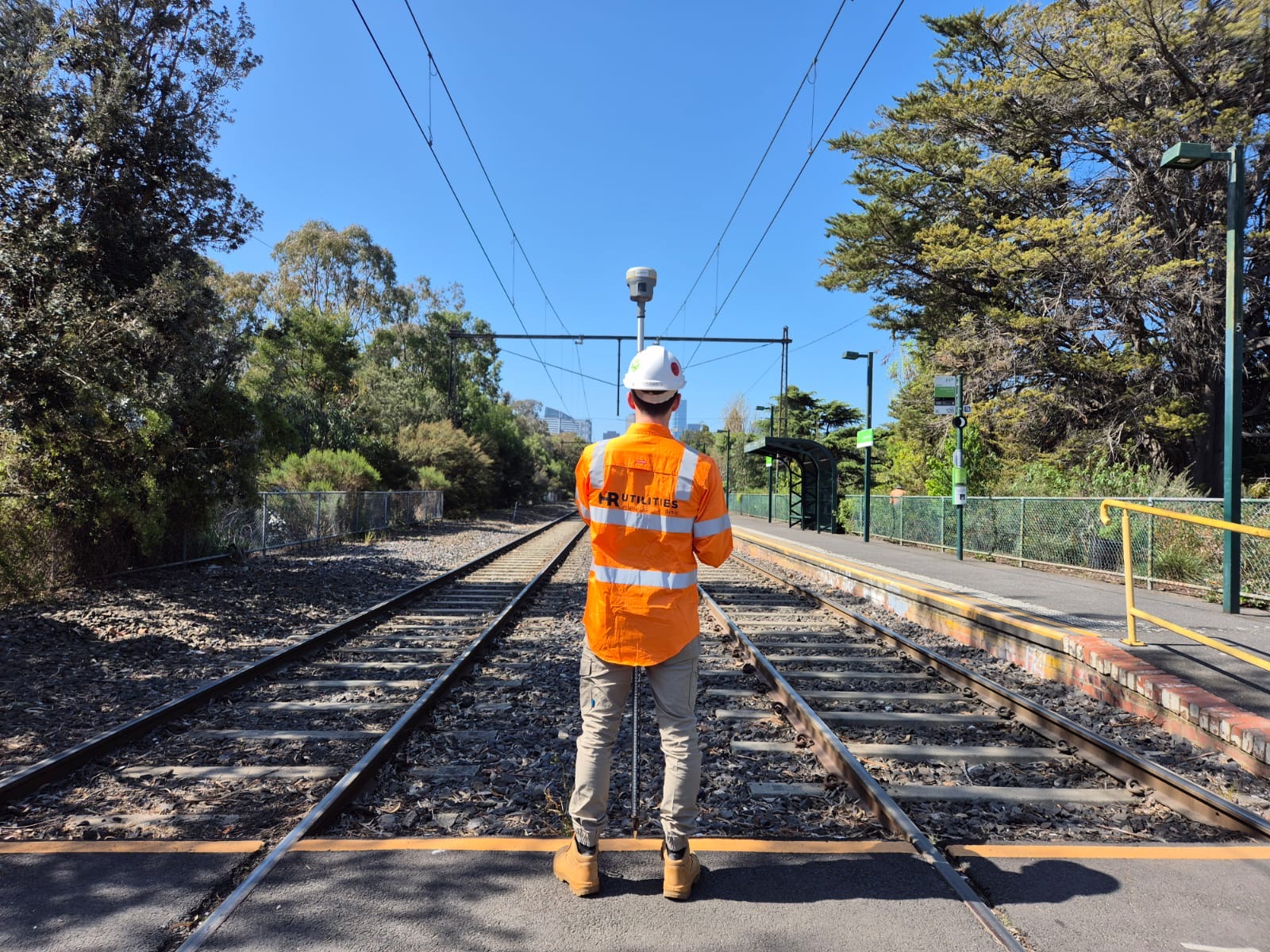
Before You Dig Australia (BYDA) is the standard first step before excavation in Australia. It delivers plans from registered asset owners such as water, gas, electricity, telecommunications for the area you plan to disturb. What it does not deliver is a complete picture of everything under the ground.
Private services, after-meter electrical, internal site drains, fire services, abandoned lines, and unrecorded alterations often sit outside the BYDA network. That gap is where most utility strikes start.
This article explains the public/private split, why records go missing, and what a project team should do after the BYDA request comes back.
What BYDA actually covers
BYDA is a referral service. When you lodge a request, BYDA passes it to the asset owners registered for your dig site. Those asset owners return whatever plans they hold for their infrastructure.
Coverage typically includes:
- Water mains and sewers owned by the water authority
- Gas distribution or transmission mains
- Electricity distribution cables
- Telecommunications trunk and lead-in cables
- Some traffic signal and streetlight cabling
This data is valuable, but it is record-based. Under AS5488:2022, it sits at Quality Level D — the lowest confidence level. It tells you that a service was recorded at some point. It does not prove current position, depth, or condition.
Energy Safe Victoria’s Underground Services Guidebook makes the duty clear: before excavation, you must identify underground services through available records and site verification.
The public/private split
Not every pipe or cable on a site belongs to a registered asset owner. Once a service leaves the public network and enters private property, the asset owner usually stops tracking it.
Common examples of private services include:
- After-meter electrical — the consumer mains from the meter to the building or switchboard
- Private water and sewer drains — site drainage between the connection point and fixtures
- Fire services lines — fire hydrant booster assemblies, private fire services mains
- Irrigation and landscape services — often installed by landscapers and never recorded
- Stormwater pits and pipes — some are authority-owned, many are private
- Communications and data cabling — internal site runs and private pits
On commercial and industrial sites, the problem multiplies. Tenants install services. Buildings are refurbished. Old lines are abandoned in place. None of this reliably finds its way back to the asset owner or the BYDA plan set.
Why records go missing
Even public asset owner records can be incomplete. Four common causes:
- Age. Older paper records were digitised with varying accuracy. Coordinates may be schematic rather than surveyed.
- Alterations. Services are diverted, upgraded, or repaired without updated as-builts being submitted.
- Abandonment. Old pipes and cables are left in the ground. They do not appear on current plans but still react to locators and excavation equipment.
- Private works. Subdivision construction, building refurbishments, and tenant fit-outs create services the asset owner never held.
This is why a site can return a thick BYDA pack and still contain critical gaps. For a national view of what that gap costs, read what a utility strike really costs in Australia. For what project teams should expect after the referral on Melbourne sites, see utility locating after BYDA in Melbourne.
What to do after BYDA
BYDA is the starting point, not the endpoint. A sound pre-excavation workflow runs like this:
- Desktop review. Compare BYDA plans against the proposed excavation footprint. Look for missing asset owners, old record dates, and services that cross the work zone without clear coordinates.
- Site walk. Look for pits, valves, hydrants, meter boxes, patch marks, conduits, and changes in pavement. Visible features often reveal services the plans miss.
- Field detection. Use electromagnetic locating for metallic services and GPR for non-metallic or unknown assets. Match the method to the service type and ground conditions.
- Survey and document. Capture detected alignments with GPS or total station, assign AS5488:2022 quality levels, and deliver CAD/GIS outputs the design and construction teams can use. On large sites, LiDAR underground mapping supplies the surface model those detections sit in.
- Escalate clash points. Where the consequence of a mistake is high, use service proving or non-destructive digging to expose and confirm the service position.
For the full step-by-step version of this workflow, use our utility locating before excavation checklist.
AS5488 quality levels as a risk ladder
AS5488:2022 gives you a clear language for confidence:
- QL-D is record-based information — BYDA plans, as-builts, historical data.
- QL-C adds a survey of visible surface features.
- QL-B detects utilities geophysically and positions them by survey.
- QL-A exposes the service physically and captures verified 3D coordinates.
A mature project escalates through these levels as the design firms up. QL-D for feasibility. QL-B across the corridor for detailed design. Targeted QL-A at confirmed clash points before excavation.
The mistake is treating QL-D as proof. It is information. Field verification turns it into something you can build around.
Frequently asked questions
Who is responsible for private utilities on a construction site?
The asset owner generally stops tracking a service once it leaves the public network and enters private property. On a construction site, the controller of the work carries the duty to identify underground services before excavation — including private ones — through records and site verification, under the Energy Safe Victoria Underground Services Guidebook and Safe Work Australia’s excavation code.
Can BYDA see private services?
No. BYDA is a referral to registered asset owners — water, gas, electricity, and telecommunications carriers. After-meter electrical, private drains, fire services, irrigation lines, and tenant-installed cabling are not part of the referral and will not appear on the plan set.
How do I find private utilities that aren’t on the plans?
Walk the site for visible clues (pits, meter boxes, hydrants, patch cuts), then commission field detection: electromagnetic locating for metallic services and GPR for non-metallic assets. Survey the detections and assign AS5488 quality levels so the private network is documented, not assumed.
What should I do if a site has no records at all?
Treat the absence of records as a gap, not a clearance. Scope a desktop review, site walk, and QL-B geophysical survey across the work footprint, then escalate confirmed clash points to QL-A service proving before excavation.
Where HR Utilities fits
HR Utilities publishes standards-led guidance on private utility locating, underground services not on plans, service proving, utility data deliverables, and utility locating quotes. For general enquiries, see contact.
Stay Connected: