
CERTLOC Certification for Utility Locators in Australia
Published on 5/10/2026 by HR Utilities
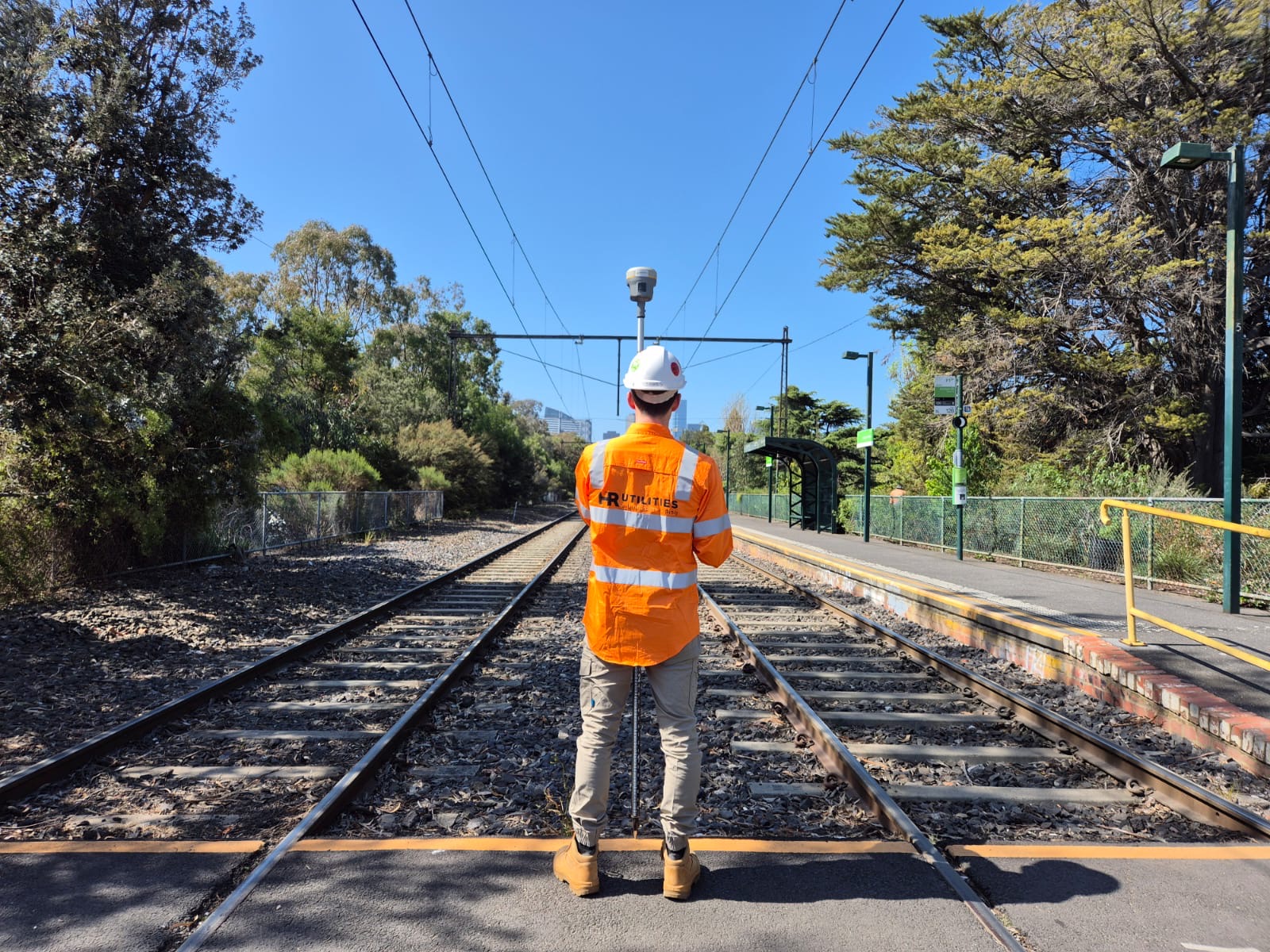
Utility strikes cost the Australian economy $4.6 billion every year (Deloitte Access Economics, 2023). Repair bills hit your budget. Delays push back timelines. Liability questions land on your desk. Workers face genuine danger when unmarked services get hit.
Every strike raises the same issue. Who located those cables and pipes? Did they hold the right qualifications for the job?
Three separate systems govern the answer. NULCA provides training and industry leadership. CERTLOC delivers competency certification that asset owners recognise. AS5488 classifies the quality of the location data itself. Understanding the differences protects your project and your position.
NULCA: The Association That Sets Training Standards
The National Utility Locating Contractors Association of Australia formed in 2004. It represents locators along with vacuum excavators, utility surveyors, GPR operators, CCTV inspectors and leak detection specialists.
NULCA works with CERTLOC, BYDA, network operators and regulators to lift standards and cut damage incidents across the country.
Its main training offering is the two-day RIICCM202E Underground Asset Location course. Participants learn signal theory, active and passive locating techniques, BYDA request processes, plan reading across all utility types, safe work systems, risk assessment and marking protocols.
Completion gives the nationally recognised unit of competency. Certified Locator status comes from a separate assessment process run by CERTLOC. NULCA states this clearly on its website.
CERTLOC: Competency Certification Asset Owners Demand
CERTLOC runs the national certification program for locators and the Certified Locating Organisation framework.
Major asset owners including Telstra require CERTLOC Certified Locators for work on their networks. Only these locators receive authorisation to access pits, manholes and certain assets. Unauthorised attempts breach the rules.
The certification combines theory examination with practical field assessment. Successful candidates carry a photo ID card. Organisations that employ them achieve CLO status, maintain specified insurance cover and use approved equipment.
This credential provides independent proof that the locator can interpret plans, apply multiple locating methods, validate findings and work safely around live assets.
AS5488: The Standard That Makes Records Usable
AS5488 defines quality levels for subsurface utility information. Level A requires physical exposure and survey. Level B relies on multiple detection methods with high confidence. Lower levels carry greater uncertainty and limit design value.
Designers, engineers and risk managers rely on these classifications. When disputes arise, the tagged records show exactly what confidence level the locate achieved.
For a complete breakdown of each quality level and the decision framework for choosing the right one, read our Australian Standard AS5488 foundational article and the AS5488 quality level selection guide for 2026.
BYDA: The Essential First Step
Before You Dig Australia lets you pull plans from every relevant asset owner before breaking ground. The information shows approximate routes and depths.
Plans serve as a starting point only. On-site locating by qualified personnel turns that data into verified, documented positions you can trust and defend.
What a Fully Compliant Locate Delivers
A locator team that meets all three elements delivers real protection. The crew holds current NULCA RIICCM202E training and carries CERTLOC certification for Telstra or high-security work. They combine electromagnetic induction with ground penetrating radar, record every method, limitation and find, then supply CAD or GIS files tagged to the right AS5488 quality level. Full BYDA coordination from request to close-out completes the package.
Civil contractors, developers and infrastructure teams receive defensible documentation from the first day.
Verifying the Locator on Your Job
Check credentials before engagement.
Request the locator’s current CERTLOC certification details and ID card number.
Confirm NULCA RIICCM202E completion for every team member assigned to site.
Ask for a sample report that includes method statements, limitations and AS5488 quality tags.
Verify the company meets CLO insurance and equipment requirements.
Vague or incomplete responses signal that the locate may not stand up under scrutiny.
CERTLOC and Locator Credential FAQs
What does CLO stand for in utility locating?
Certified Locating Organisation — the CERTLOC framework’s company-level certification. A CLO employs Certified Locators, maintains specified insurance cover, and uses approved equipment. When an asset owner asks for a CLO, it is asking for the company process behind the locators, not just the individuals.
Can a locator be CERTLOC certified but not NULCA trained?
Practically, no. The CERTLOC assessment tests the competencies taught in NULCA’s RIICCM202E Underground Asset Location course, so the training is the standard route into the assessment. Treat a claim of certification with no evidence of training as a red flag during pre-qualification.
Do I need a CERTLOC locator for a small domestic job?
A single homeowner digging a fence or a small excavation may not need the same credential stack as a civil contractor. But any dig that approaches buried services — and in suburban Melbourne that means almost every dig — is safer and easier to defend with a crew that holds the training and certification anyway. For service-level certainty on the job, our underground utility locators in Melbourne page explains what a certified crew delivers on site.
What happens if a locate is done without certification?
The locate itself may still be technically accurate — certification is not a guarantee of accuracy, and its absence is not proof of error. The problem is evidentiary: when a strike happens, the quality of the locate process is examined, and an uncertified, undocumented locate is hard to defend. AS5488-tagged records and current certification are what make a locate defensible.
HR Utilities applies these standards on every project. Our locators complete NULCA training, achieve CERTLOC certification where required and produce AS5488-classified records as standard. We coordinate BYDA end to end so you receive complete, usable documentation. Where a locate needs physical proof, our certified crews work with the non-destructive digging team to close the gap to QL-A.
Need expert utility locating services?
- Explore our utility locating services
- Learn about underground service location in Melbourne
- View our complete subsurface utility mapping services
- See our utility data deliverables — CAD, GIS, BIM format options
- For urgent work, see emergency utility locating in Melbourne
Stay Connected:
Frequently Asked Questions
What is CERTLOC certification? +
CERTLOC runs the national certification program for utility locators in Australia. Certification combines a theory examination with a practical field assessment; successful candidates carry a photo ID card. The Certified Locating Organisation (CLO) framework extends the same standard to companies, covering qualified staff, specified insurance, and approved equipment. Major asset owners including Telstra require CERTLOC Certified Locators for work on their networks.
Is CERTLOC certification mandatory for utility locators? +
Not by law, but in practice yes for most network work. Telstra and other major asset owners require CERTLOC Certified Locators — only certified locators receive authorisation to access pits, manholes, and certain assets. For general construction and civil work, asset owners increasingly specify CERTLOC or equivalent competency in pre-qualification documents, and a certified crew is the defensible baseline when a strike is investigated.
What is the difference between NULCA and CERTLOC? +
NULCA is the industry association — it sets training standards and delivers the nationally recognised RIICCM202E Underground Asset Location course through member trainers. CERTLOC is the certification body — it runs the independent theory and field assessment that turns a trained person into a Certified Locator. Training is a prerequisite for competence; certification is the independent proof of it.
How long does CERTLOC certification last? +
CERTLOC certifications are subject to ongoing audit rather than lifetime validity. Certified Locators and Certified Locating Organisations must maintain their status through audits of practice, insurance, and equipment. Because conditions change, the right check is simple: ask for the locator's current CERTLOC card and expiry before the crew mobilises, and verify it against CERTLOC's published register where available.
How do I check a locator's CERTLOC status? +
Request the locator's current CERTLOC photo ID card number and the company's CLO certificate before engagement. Confirm every team member assigned to site holds current certification, not just the crew leader. CERTLOC publishes its accredited locators and organisations publicly, so the details can be verified directly rather than taken on trust.
Does CERTLOC certification cover all types of utility locating? +
CERTLOC certification covers the core locating competency — plan interpretation, active and passive locating methods, signal theory, marking, and safe work around live assets. It does not replace project-specific requirements such as GPR operation, confined space entry, or Energy Safe Victoria spotter registration. Confirm the full competency matrix for the task, not the certification alone.
What does CLO stand for in utility locating? +
Certified Locating Organisation — the CERTLOC framework's company-level certification. A CLO employs Certified Locators, maintains specified insurance cover, and uses approved equipment. When an asset owner asks for a CLO, it is asking for the company process behind the locators, not just the individuals.
Can a locator be CERTLOC certified but not NULCA trained? +
Practically, no. The CERTLOC assessment tests the competencies taught in NULCA's RIICCM202E Underground Asset Location course, so the training is the standard route into the assessment. Treat a claim of certification with no evidence of training as a red flag during pre-qualification.
Do I need a CERTLOC locator for a small domestic job? +
A single homeowner digging a fence or a small excavation may not need the same credential stack as a civil contractor. But any dig that approaches buried services — and in suburban Melbourne that means almost every dig — is safer and easier to defend with a crew that holds the training and certification anyway.
What happens if a locate is done without certification? +
The locate itself may still be technically accurate — certification is not a guarantee of accuracy, and its absence is not proof of error. The problem is evidentiary: when a strike happens, the quality of the locate process is examined, and an uncertified, undocumented locate is hard to defend. AS5488-tagged records and current certification are what make a locate defensible.