
What a Utility Strike Really Costs in Australia — and How to Design It Out
Published on 7/1/2026 by HR Utilities
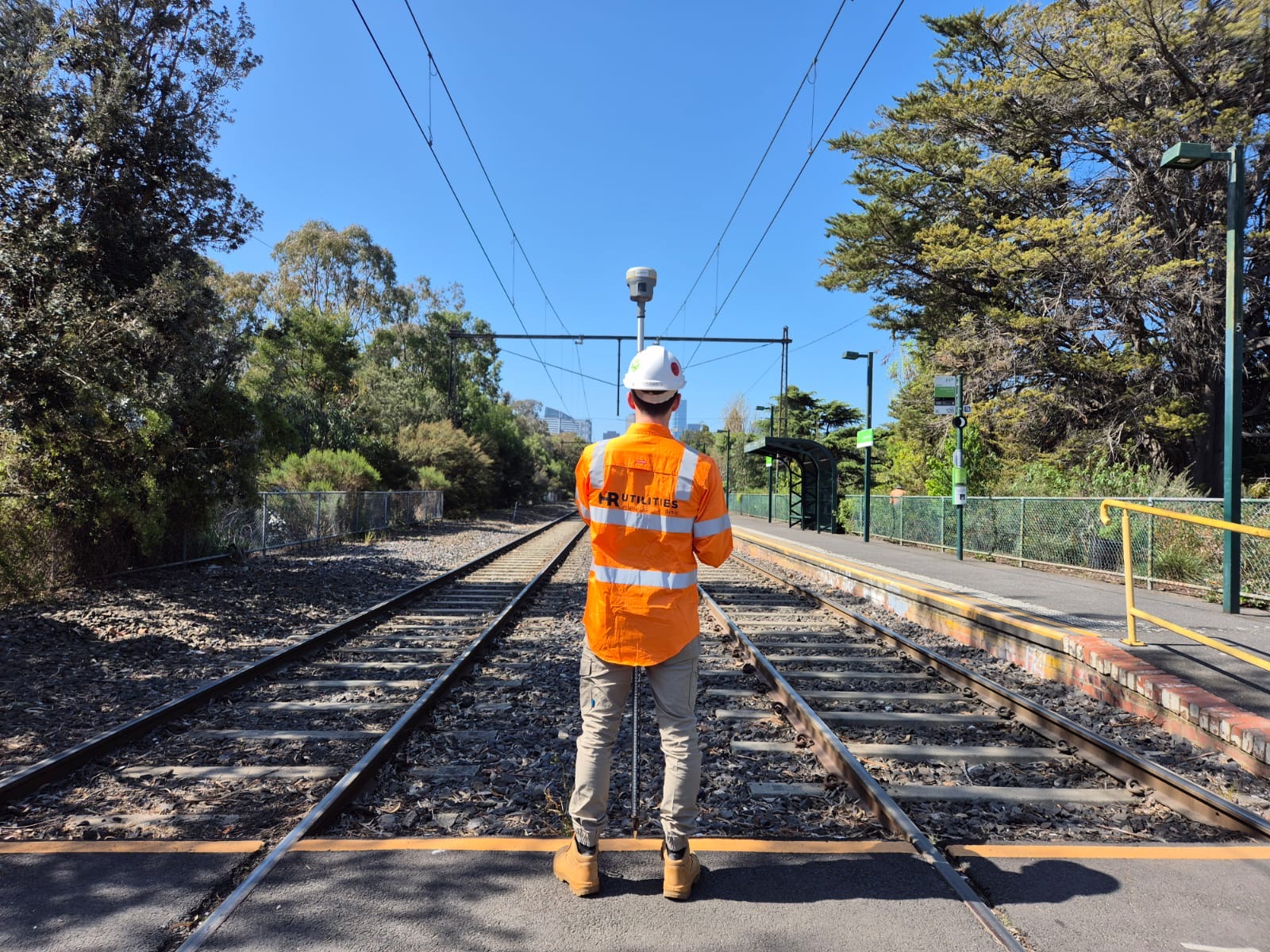
Most construction teams know a utility strike is bad. Few understand just how bad. When a machine clips a live cable or severs a gas main, the repair bill is the smallest item on the invoice. The real cost — in delays, traffic management, service reinstatement, designer rework, regulatory scrutiny, and potential injury — dwarfs what it took to fix the pipe.
Australia’s underground utility environment is dense, old, and substantially under-documented. A national economic assessment, project contract law, and decades of hard lessons from the field all point to the same conclusion: the most effective way to manage strike risk is to design it out before excavation begins, not react to it after.
The real bill goes well beyond the repair
In November 2024, Before You Dig Australia (BYDA) published an Economic Assessment of Utility Strikes in Australia, drawing on analysis by Deloitte Access Economics. The findings are significant.
Australia records more than 15,000 utility strikes every year. The total economic cost is approximately $4.6 billion annually — a figure that covers direct repair, flow-on delays, productivity losses, and disruption to the broader community and economy. That works out to a total-to-repair cost ratio of approximately 29:1: for every dollar spent fixing the damaged asset, another $28 flows out across the system.
Victoria accounts for a disproportionate share. At an estimated 9,300 strikes per year, the state carries roughly 60% of the national total despite representing a far smaller share of land area. That concentration reflects the density and age of Melbourne’s underground infrastructure, much of which was installed without the precision that modern standards now require.
The BYDA assessment also found that improved data standards alone — without any other intervention — could prevent an estimated 17% of strikes, translating to approximately $782 million in annual savings at the national level. The problem is not simply that excavators are careless. It is that the information guiding excavation decisions is often wrong.
| Cost category | Nature of impact |
|---|---|
| Direct repair | Labour, materials, specialist contractors — the visible line item |
| Traffic and access management | Lane closures, detours, permits — days to weeks |
| Service reinstatement | Utility owner restoration works, third-party coordination |
| Program delay | Contractor standing time, milestone slippage, liquidated damages risk |
| Designer rework | Redesign when buried services do not match the drawings |
| Community and economic disruption | Affected businesses, households, public services |
| Regulatory and incident costs | Notifiable incident obligations, investigation, potential prosecution |
| Reputational cost | Relationship with client, future tender assessment |
The ratio of 29:1 is a system-wide average. On individual projects — particularly those involving gas transmission mains, high-voltage cables, or fibre trunk lines — the multiplier can be substantially higher.
Why strikes keep happening
The data quality problem is structural. The majority of utility information in circulation sits at Quality Level D under AS 5488.1:2022 — that is, records and plans only, with no field verification. This is the data returned by a BYDA response: as-built drawings, network schematics, historical records. BYDA is explicit that its plans are indicative only. They omit depth, do not account for services that have moved or been replaced, and exclude private and domestic connections entirely — the public/private split covered in private vs public utilities: what BYDA doesn’t cover.
The implications are significant. A project team that designs to BYDA data is designing to unverified, often decades-old information. The horizontal position may be approximately right. The depth is usually unknown. The presence of unlisted services is common in older corridors.
Compounding this, only New South Wales currently mandates registration of utility assets with a referral authority. In other jurisdictions, registration is voluntary, which means the coverage of the BYDA network varies considerably. A BYDA response showing no assets in an area is not confirmation that no assets are present.
AS 5488.1:2022 — the Australian Standard for Subsurface Utility Information — classifies this reality into four quality levels. QL-D (records) is where most projects start. The gap between QL-D and physical ground truth can be substantial, and it is precisely that gap where strikes occur.
The prevention hierarchy
AS 5488.1:2022 defines four quality levels as a progressive escalation framework — not a menu of options to pick from independently. Each level builds on the one before it.
QL-D is the records baseline: BYDA responses, as-built drawings, historical utility owner data. Horizontal and vertical positions are inferred, not measured. No field work is involved.
QL-C adds a condition survey of visible surface features — pit lids, valve boxes, marker posts, surface-mounted equipment. These features are surveyed and used to extend the QL-D records. Still no detection of buried assets.
QL-B involves geophysical detection of buried utilities — electromagnetic locating (EML) and ground-penetrating radar (GPR) — with survey pickup of detected positions. Under AS 5488.1:2022, QL-B achieves horizontal accuracy of ±300 mm and vertical accuracy of ±500 mm. For non-conductive assets (PVC water mains, HDPE gas pipes, concrete stormwater drains), EML alone is insufficient and GPR becomes the primary detection method.
QL-A is physical exposure. A utility is uncovered using non-destructive digging (NDD) — hydro vacuum or air knife excavation — and its three-dimensional position is captured by survey to within ±50 mm. QL-A is the only quality level that removes positional uncertainty entirely. It is the only level where depth is verified rather than inferred.
The AS 5488 framework does not require QL-A everywhere. It requires staged escalation based on project risk: start with QL-D as a baseline, advance to QL-C and QL-B across the corridor, and apply QL-A at specific clash points where design decisions depend on verified position.
Where QL-A and non-destructive digging pay for themselves
The BYDA economic assessment estimated that better data standards could prevent around $782 million in strike costs annually. That figure is achievable not by applying QL-A everywhere, but by applying it where it matters: at confirmed design clash points before excavation begins.
This is where targeted potholing delivers its commercial return. A single QL-A investigation at a confirmed intersection of a proposed pile and an existing gas main might cost several hundred dollars. The alternative — a gas strike during piling — can cost tens of thousands in direct repair, days of shutdown, a notifiable incident obligation under state safety legislation, and a contractor liability exposure that goes well beyond the repair bill.
The economics shift further when viewed against the project lifecycle. An investigation completed during detailed design — before drawings are finalised, before quantities are locked in, before tender — allows the design to accommodate the real position of buried assets. That is far cheaper than a variation claim mid-construction when the field reality does not match the drawings.
For non-conductive utilities in particular, QL-A is often the only viable path to verified position. GPR provides good horizontal detection of PVC water mains and concrete drains but limited depth accuracy. Service proving by physical exposure — conducted under non-destructive digging protocols — closes that gap.
Who carries the risk
Under AS 4000-1997 General Conditions of Contract, Clause 25, latent conditions — physical conditions encountered during construction that differ materially from what was reasonably expected — entitle a contractor to a variation and time extension. Where a principal has provided utility information that proves inaccurate, that information can constitute a latent condition, triggering a cost and program claim.
Case law reinforces this. In Abigroup v Sydney Catchment Authority [2006] NSWCA 282, the principal was found liable for misleading utility information provided during tender. The contractor recovered damages of approximately $7.5 million. In D&V Services v SA Power Networks [2018] SASCFC 92, the court confirmed that BYDA data marked “indicative only” does not discharge a contractor’s duty to investigate; the contractor carried the risk of relying solely on plans.
The commercial lesson from these decisions is consistent: both principals and contractors carry exposure, and the distribution of that exposure depends heavily on what investigation was completed before the works began and what information was disclosed at tender.
Contractors who accept a scope with only QL-D data and proceed to excavation are carrying a risk that is not fully priced. Principals who provide QL-D data at tender and present it as sufficient for construction are exposed to misleading conduct claims if the reality differs.
Designing risk out — through pre-tender utility investigation that advances data quality to QL-B or targeted QL-A before contracts are awarded — is the most reliable way for both parties to manage this exposure.
Pre-dig checklist
Before any excavation begins near existing underground services, the following steps represent minimum due diligence under the BYDA framework and AS 5488.1:2022:
- Lodge a BYDA enquiry and collect all utility owner plan responses — this establishes the QL-D baseline
- Review all plans critically: identify gaps, aged records, non-conductive assets, and areas with no plan coverage
- Assume services are present where records are absent, particularly for private connections and older infrastructure
- Commission a QL-B geophysical investigation across the project corridor, with survey pickup of all detections
- Identify design clash points from the QL-B dataset and programme targeted QL-A potholing at those locations
- Ensure all personnel working near services have reviewed No-Go Zone requirements under the WorkSafe Victoria and Energy Safe Victoria Guide to Undertaking Work Near Underground Services (December 2022)
- Confirm that any notifiable works in proximity to gas or electrical infrastructure are communicated to the relevant asset owner before works commence
- Document the quality level of all utility information used in design and construction decisions
Frequently asked questions
How is the $4.6 billion annual cost figure calculated?
The figure comes from the BYDA Economic Assessment of Utility Strikes in Australia published in November 2024, drawing on Deloitte Access Economics analysis. It represents the total economic cost of strikes — direct repair plus flow-on costs across the economy — rather than the repair cost alone. The 29:1 ratio reflects how widely costs propagate beyond the point of damage.
Does a BYDA response satisfy the duty to investigate before excavation?
No. BYDA plans are explicitly described as indicative only. They establish a QL-D baseline of records and plans, with no field verification of position or depth. The Safe Work Australia Model Code of Practice for Excavation Work (October 2022) requires that the location and depth of services be established before excavation begins, using detection methods appropriate to the risk. A BYDA response alone does not meet that requirement where services may be present and unverified.
At what project stage should QL-A investigations be completed?
QL-A is most cost-effective when completed during detailed design, at confirmed clash points identified from a QL-B corridor survey. This allows verified asset positions to be incorporated into the design before drawings are finalised and before tender. Completing QL-A during construction — after excavation has already begun — removes the opportunity to design around the actual utility position and increases programme risk.
Who is liable if a utility strike occurs on site?
Liability depends on the circumstances and the contract in place. Under AS 4000-1997 Clause 25, latent conditions can support a contractor variation claim where the encountered conditions differed materially from what the contract documents indicated. Principals who provide inaccurate utility information at tender face exposure under misleading conduct principles, as established in Abigroup v Sydney Catchment Authority [2006] NSWCA 282. Both parties can reduce their exposure by ensuring utility information is advanced to an appropriate quality level before works are committed to.
Can non-destructive digging be used on all utility types?
Yes. NDD using hydro vacuum or air knife excavation is suitable for exposing all underground utility types without mechanical impact. It is the required method for QL-A investigation under AS 5488.1:2022 and is particularly important for non-conductive assets — PVC water mains, HDPE gas pipes, concrete stormwater drains — where geophysical detection methods cannot confirm depth with confidence.
HR Utilities provides AS5488-compliant utility investigations, non-destructive digging, and service proving across Victoria, Western Australia, Queensland, and South Australia. Contact our team to discuss investigation scope and risk management for your project.
Related services:
- Pre-Tender Utility Investigation & Due Diligence
- Non-Destructive Digging & Vacuum Excavation
- Water & Sewer Main Locating
- Subsurface Utility Mapping
Stay Connected:
Further reading: